
The Ultimate Guide to Roller Leveler Technology and Industrial Applications
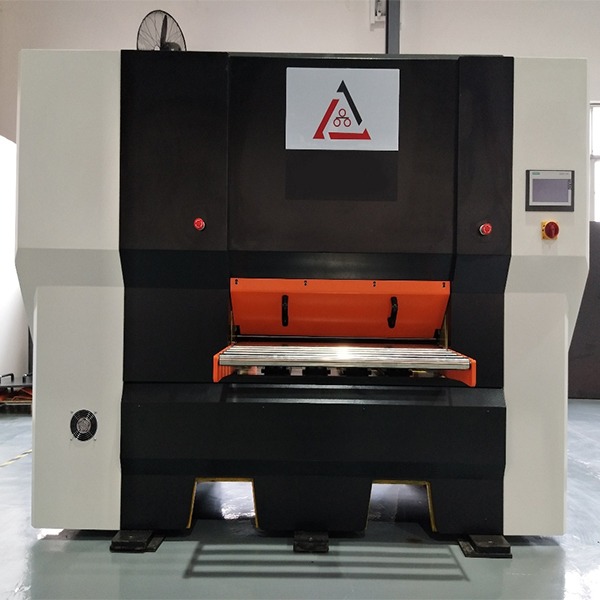
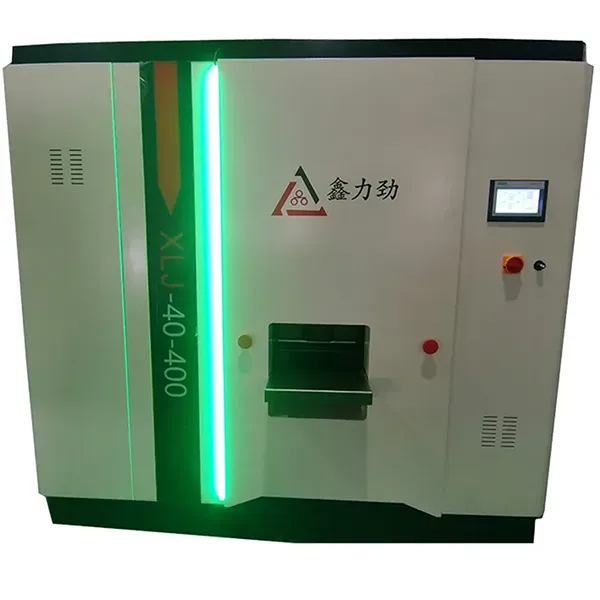
In the world of industrial manufacturing, precision is not just a goal; it's a fundamental requirement. The quest for perfectly flat, stress-free metal is a constant challenge, and at the heart of the solution lies a pivotal piece of equipment: the Roller Leveler. For companies like XINLIJIN, specializing in advanced industrial automation, engineering a high-performance Roller Leveler is about delivering unparalleled accuracy and reliability to production lines worldwide. This guide delves deep into the mechanics, benefits, and critical selection criteria for this indispensable machine.
What is a Roller Leveler and How Does It Work?
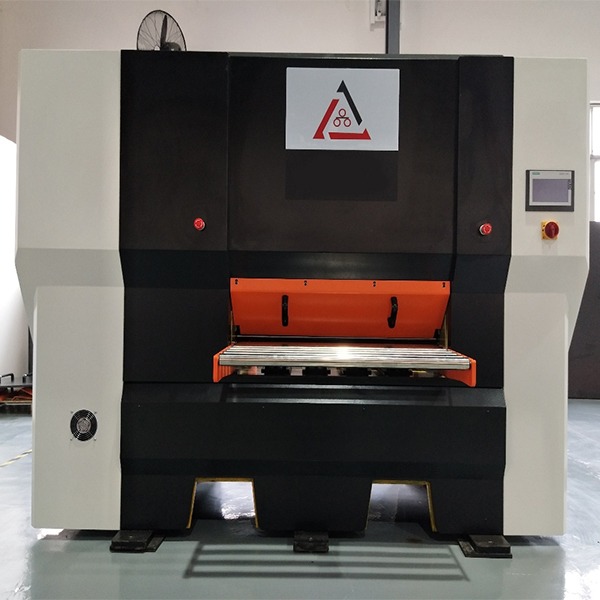
A Roller Leveler is a machine designed to correct the flatness of metal sheets, strips, or plates by systematically bending the material through a series of alternating rolls. The core principle is elegant yet powerful. The material is fed through multiple sets of small-diameter work rolls, arranged in an offset pattern. As the metal passes through, it is subjected to alternating cycles of bending and un-bending. This process effectively elongates the shorter, compressed fibers within the material—typically those in the wavy or buckled areas—to match the length of the longer fibers. The result is a uniformly flat and level product. The sophisticated design of a modern Roller Leveler ensures that this corrective action is applied with precise control, addressing specific imperfections without introducing new stresses.
The Critical Advantages of Integrating a Modern Roller Leveler
Investing in a state-of-the-art Roller Leveler from a trusted manufacturer like XINLIJIN translates into direct and significant benefits for your manufacturing operation.
-
Superior Product Quality: A high-precision Roller Leveler guarantees a flawlessly flat surface, which is essential for subsequent processes like coating, painting, printing, or high-tolerance assembly. It eliminates issues like oil canning, edge wave, and center buckle.
-
Enhanced Process Efficiency: By ensuring material flatness from the start, a Roller Leveler prevents jams, misalignments, and defects in downstream operations such as stamping, laser cutting, and welding. This leads to smoother production flow, reduced downtime, and higher overall equipment effectiveness (OEE).
-
Reduction of Internal Stresses: Perhaps one of the most vital functions of a Roller Leveler is its ability to neutralize internal stresses locked within the metal during previous rolling or cooling processes. This stress leveling is crucial for preventing future distortion of the part after it is cut or machined, ensuring the long-term dimensional stability of the final product.
-
Material Versatility: A well-engineered Roller Leveler is not limited to a single type of metal. It can be calibrated to handle a wide range of materials, including various grades of steel, aluminum, copper, and other non-ferrous metals, across different thicknesses and tensile strengths.
Key Features to Look for in an Industrial-Grade Roller Leveler
Not all leveling machines are created equal. When selecting a Roller Leveler for demanding industrial applications, several features are non-negotiable.
-
Robust Frame Construction: The machine's frame must be incredibly rigid to withstand the tremendous forces involved in leveling without deflecting, ensuring consistent results across the entire sheet width.
-
Precision-Ground Work Rolls: The quality of the work rolls is paramount. They must be made from high-grade alloy steel, hardened, and precision-ground to maintain their geometry and surface finish under continuous load.
-
Advanced Adjustment Mechanisms: Look for a Roller Leveler with independent, micrometric adjustments for the backup rolls and entry/exit roll sets. This allows operators to fine-tune the leveling action for specific material characteristics and flatness issues.
-
Powerful Drive System: A robust and synchronized drive system is essential for maintaining consistent feed speed and torque, preventing slippage and ensuring a smooth, chatter-free operation.
-
Integration with Automation: Modern Roller Leveler units are often part of a larger automated system, such as an integrated decoiler and feeder line. Compatibility with CNC controls and programmable logic controllers (PLCs) is a key feature for Industry 4.0 readiness.
Applications of the Roller Leveler Across Key Industries
The versatility of the Roller Leveler makes it a cornerstone technology in numerous sectors. In the automotive industry, it prepares body panels and chassis components. In aerospace, it levels high-strength aluminum and titanium sheets. Appliance manufacturers rely on it for producing flat outer casings for refrigerators and ovens. The construction industry uses it for architectural cladding and structural components. Essentially, any industry that demands flat, stable metal relies on the capabilities of a precision Roller Leveler.
Conclusion: The XINLIJIN Commitment to Roller Leveler Excellence
The choice of a Roller Leveler is a strategic investment in the quality and efficiency of your manufacturing output. It is a decision that impacts your bottom line and your reputation for delivering superior products. At XINLIJIN, we engineer our Roller Leveler machines with an unwavering commitment to precision, durability, and innovation. Our solutions are designed to integrate seamlessly into your automated production lines, providing the reliable performance you need to stay competitive in a global market. To discover how our Roller Leveler technology can transform your material processing, explore the XINLIJIN product range today.
Recent News