
The Critical Process of Internal Stress Released in Metal Leveling and Straightening
In the world of precision metal manufacturing, achieving perfect flatness involves much more than correcting visible imperfections. The most crucial aspect often lies beneath the surface: the strategic and controlled process of having Internal Stress Released. When Internal Stress Released occurs effectively during leveling, it transforms unstable, distorted metal into a dimensionally stable, reliable material ready for high-tolerance fabrication. For industry leaders like XINLIJIN, engineering leveling machines that guarantee Internal Stress Released is fundamental to delivering manufacturing solutions that stand the test of time. This comprehensive guide explores the science behind why Internal Stress Released is non-negotiable and how modern technology achieves it.
Understanding the Origin and Impact of Locked-In Internal Stress
Before delving into how Internal Stress Released is achieved, it is vital to understand its source. Internal stresses are locked into metal during various upstream processes like rolling, forging, or uneven cooling. These processes create a non-uniform molecular structure where some fibers are in tension while others are in compression. This unstable equilibrium is the root cause of common flaws like coil set, bow, and twist. If this stress is not neutralized—if Internal Stress Released does not occur—the material will remain inherently unstable. This latent stress manifests as spring-back after cutting, warping during machining, or distortion in the final assembled product, leading to scrap, rework, and quality failures.
How Precision Roller Leveling Facilitates Internal Stress Released
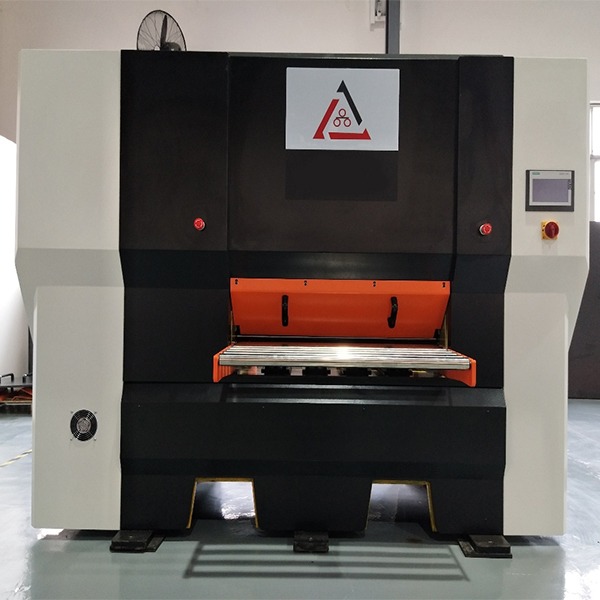
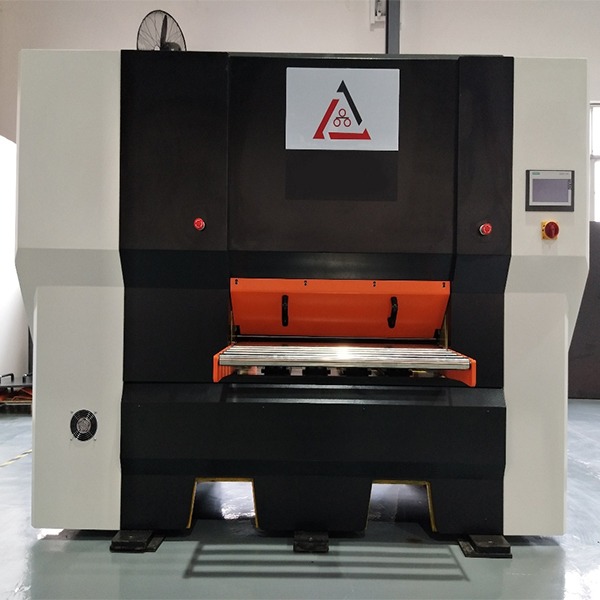
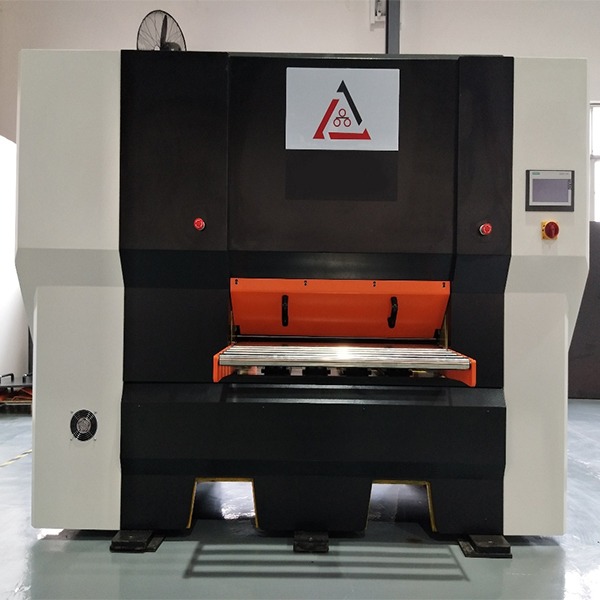
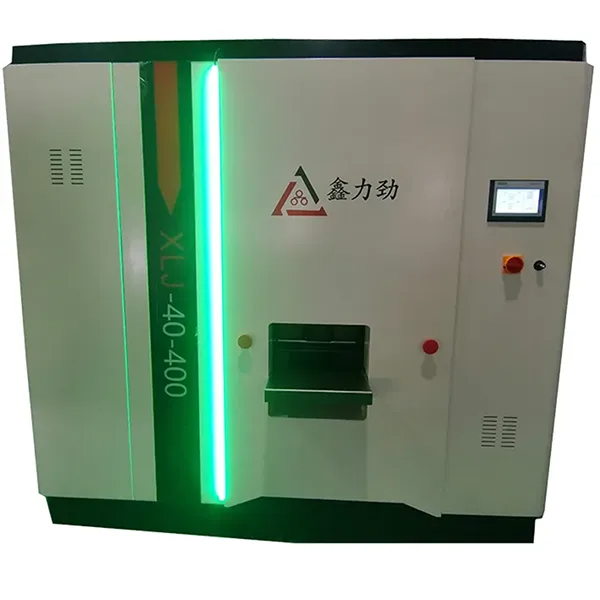
The primary function of an advanced roller leveling machine is to act as a catalyst for having Internal Stress Released. This is not a passive process but an active mechanical intervention. A precision leveler, like those manufactured by XINLIJIN, works by passing the metal sheet through a series of offset rolls that subject the material to alternating bending cycles. As the metal is bent back and forth, its yield point is progressively exceeded in a controlled manner. This systematic plastic deformation forces the material's crystalline structure to reorganize itself. It is through this precise mechanical working that the crucial event of Internal Stress Released takes place. The opposing locked-in stresses effectively cancel each other out, resulting in a stress-neutral state.
The Direct Correlation Between Internal Stress Released and Product Quality
The moment Internal Stress Released is successfully achieved marks a significant upgrade in the quality and reliability of the metal. The benefits are immediate and far-reaching. When Internal Stress Released occurs, the material becomes dimensionally stable. Parts stamped or laser-cut from this stress-relieved metal will not warp or distort over time, ensuring long-term geometric accuracy. This stability is paramount for complex assemblies in industries like automotive and aerospace, where micron-level precision is mandatory. Furthermore, with Internal Stress Released, the material behaves more predictably during subsequent forming operations, leading to fewer production issues, reduced scrap rates, and a substantially higher overall first-pass yield.
Key Machine Features That Ensure Internal Stress Released
Not all leveling equipment is equally capable of ensuring that Internal Stress Released is complete and uniform. Several machine characteristics are critical for this purpose. A phenomenally rigid machine frame is the first prerequisite; it must resist deflection to apply consistent force across the entire sheet width, ensuring Internal Stress Released happens evenly from edge to edge. Secondly, the ability to make fine, independent adjustments to the backup roll assemblies is essential. This allows operators to create a customized pressure profile that matches the specific stress pattern of the incoming material, guaranteeing that Internal Stress Released is achieved throughout the entire cross-section of the metal, not just on the surface.
Optimizing the Process to Guarantee Internal Stress Released
Achieving consistent Internal Stress Released requires more than just powerful machinery; it demands a refined process. Key parameters must be meticulously controlled. The penetration depth of the work rolls must be calibrated to impose just enough strain to exceed the material's yield point without causing over-extension or surface damage. The number of bending cycles, determined by the number of rolls and the machine's speed, must be sufficient to work the material thoroughly. An operator trained to understand material science can fine-tune these parameters, ensuring that for every batch and material grade, Internal Stress Released is achieved optimally, resulting in a perfectly flat and stable product.
The XINLIJIN Standard for Achieving Internal Stress Released
At XINLIJIN, our engineering philosophy is built upon the foundational principle of facilitating complete Internal Stress Released. We design our roller levelers, precision leveling machines, and integrated lines with the specific goal of providing manufacturers with the most reliable tool for stress neutralization. Our machines incorporate the robust construction, precision components, and advanced control systems necessary to manage the complex process of having Internal Stress Released. When you partner with XINLIJIN, you are not just acquiring a machine that flattens metal; you are investing in a system that guarantees dimensional stability by ensuring that Internal Stress Released is at the core of its operation. Contact us to learn how our technology can bring stability and quality to your manufacturing process.
Recent News