
Understanding and Overcoming the Bauschinger Effect in Metal Leveling Processes
In the science of metal forming and flattening, professionals frequently encounter a fundamental material behavior known as the Bauschinger Effect. This phenomenon is not just a theoretical concept but a practical challenge that directly impacts the quality and stability of processed metals. For manufacturers utilizing roller levelers and precision straightening equipment, comprehending the Bauschinger Effect is essential for achieving true, lasting flatness. At XINLIJIN, our engineering philosophy is rooted in addressing such core material sciences, designing leveling machines that actively counteract the Bauschinger Effect to deliver unparalleled product consistency.
What Exactly is the Bauschinger Effect?
The Bauschinger Effect is a material science phenomenon observed in metals that have been plastically deformed. It describes how the yield strength of a metal decreases when the direction of the applied stress is reversed. In simpler terms, if a metal is stretched (tensile deformation) beyond its yield point, its resistance to subsequent compression (compressive deformation) in the opposite direction is lowered, and vice-versa. This asymmetry in yield strength is the hallmark of the Bauschinger Effect. It occurs due to the reorganization and back-stress created by dislocations within the metal's crystalline structure during the initial deformation. For any operation involving bending and straightening, ignoring the Bauschinger Effect means accepting a product with latent internal stresses, prone to spring-back or future distortion.
Why the Bauschinger Effect is a Critical Concern in Metal Leveling
The process of leveling metal sheet, plate, or strip inherently involves alternating bending—a direct application of reversed loading. A conventional roller leveler works by passing material through a series of rolls that bend it back and forth. If this process is not meticulously controlled, it can exacerbate the very issues it aims to solve, precisely because of the Bauschinger Effect. The initial bending cycles can soften the material in the opposite direction, making it difficult to achieve a stable, stress-neutral state. The presence of the Bauschinger Effect means that simply bending the metal straight is insufficient; the process must be sophisticated enough to manage the material's altered mechanical properties in real-time. Failure to account for this can result in products that appear flat upon leaving the machine but later warp or twist as internal stresses rebalance.
How Advanced Roller Leveler Technology Counters the Bauschinger Effect
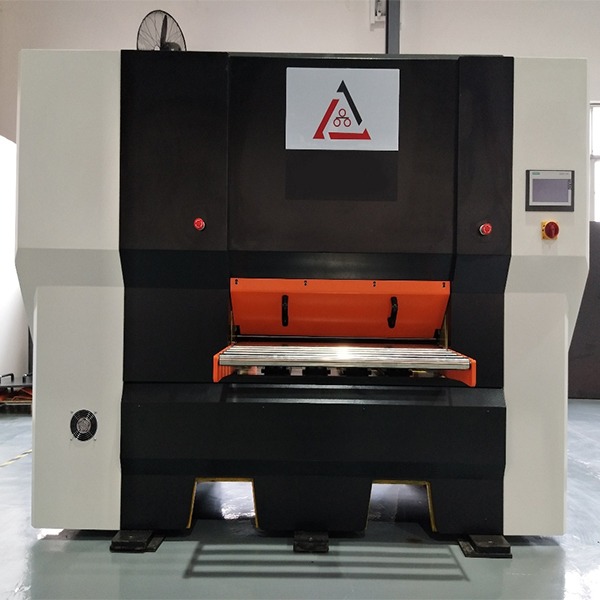
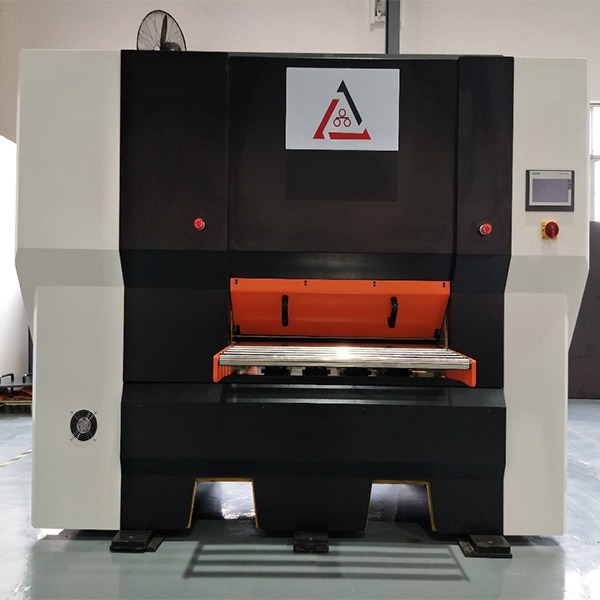
Modern precision leveling machines from leading manufacturers like XINLIJIN are specifically engineered to mitigate the Bauschinger Effect. The solution lies in controlled, precise plastic deformation. Our roller levelers are designed not merely to bend the metal, but to subject it to a calculated sequence of strain cycles that push the material slightly past its yield point in both tension and compression. This carefully calibrated process, managed by advanced CNC systems, effectively "resets" the dislocation networks within the metal. By doing so, it neutralizes the back-stresses that cause the Bauschinger Effect, resulting in a stable, homogeneous material with a symmetrical yield strength. This is why a XINLIJIN roller leveler doesn't just create temporary flatness; it engineers permanent dimensional stability into every sheet.
Key Machine Features That Manage the Bauschinger Effect
To effectively combat the Bauschinger Effect, a leveling machine must possess several critical features. Superior roll rigidity is paramount; the frame and rolls must not flex, ensuring that the applied stress is consistent and predictable across the entire material width, which is essential for managing the complex stress-strain relationship defined by the Bauschinger Effect. Furthermore, independent and micrometrically adjustable backup roll assemblies allow operators to create the exact pressure profile needed. This precision enables the machine to impose a perfect strain gradient, effectively "working" the metal through the yield point to negate the Bauschinger Effect without causing surface damage or over-working the material.
The Direct Benefits of Mitigating the Bauschinger Effect
When you successfully control the Bauschinger Effect, the benefits to your manufacturing process are substantial and measurable. The most significant advantage is the elimination of spring-back and the prevention of delayed distortion. Parts that are leveled with this principle in mind remain flat after cutting, punching, or machining, which drastically reduces scrap rates and improves the quality of final assemblies. This leads to enhanced performance in critical applications, from automotive components to architectural panels. By investing in technology that understands and counters the Bauschinger Effect, you are not just buying a machine; you are investing in a fundamental improvement to your product's integrity and your brand's reputation for quality.
Partner with XINLIJIN for Scientifically Advanced Leveling
At XINLIJIN, we build more than just machinery; we provide scientific solutions to industrial challenges. Our deep understanding of phenomena like the Bauschinger Effect is integrated directly into the design and control logic of our roller levelers, precision leveling machines, and integrated feeder lines. We empower our clients to produce superior, stable flat metal products consistently. If your goal is to move beyond superficial flatness and achieve genuine material perfection, partner with a manufacturer who respects the science. Contact XINLIJIN today to discover how our technology turns complex material challenges into your competitive advantage.
Recent News