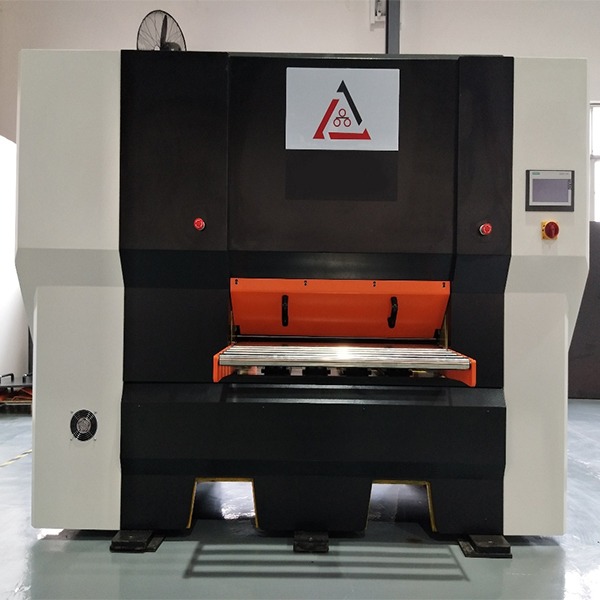

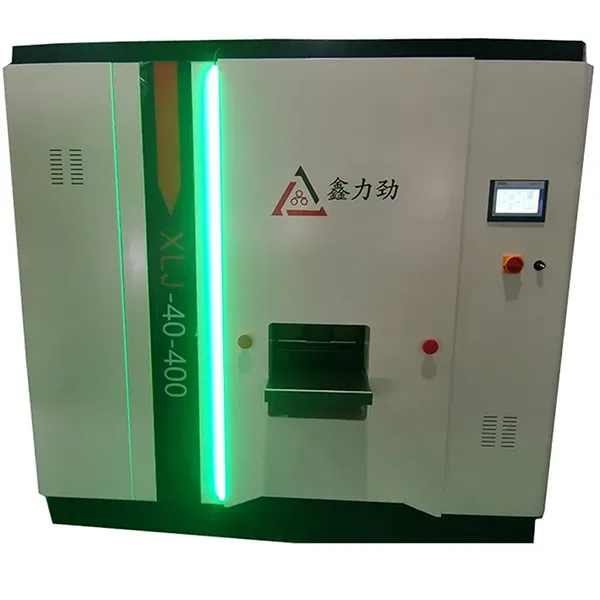
How a Roller Leveler Enhances Material Flatness in Industrial Applications
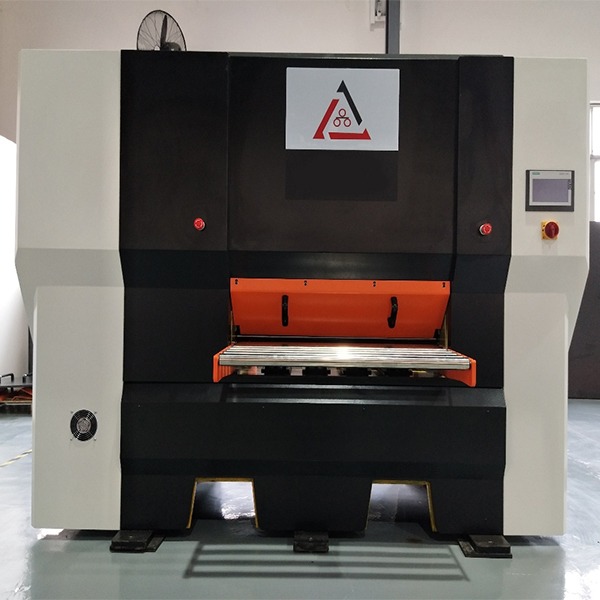
In the world of precision manufacturing, the flatness of metal sheets and strips is a non-negotiable requirement. Achieving this critical specification is the primary function of a roller leveler. This machine is a cornerstone in metal processing lines, ensuring that subsequent fabrication steps, such as stamping, cutting, or welding, are performed on perfectly flat material. The absence of a roller leveler can lead to production issues, wasted material, and inferior final products.
The fundamental challenge in metal processing is overcoming inherent internal stresses and imperfections introduced during previous rolling or coiling stages. These stresses manifest as wavy edges, center buckles, or coil set, which compromise the structural integrity and appearance of the metal. A roller leveler is engineered specifically to counteract these defects.
The Core Mechanism: Bending and Counter-Bending
The operational principle of a roller leveler is based on the controlled application of alternating bending stresses. The machine consists of two sets of precisely aligned work rolls—top and bottom—arranged in an intermeshing pattern.
As the metal sheet passes through these rolls, it is subjected to a series of subtle, reverse bends. This process deliberately stresses the material beyond its yield point in specific, isolated zones. The longer fibers in convex areas are compressed, while the shorter fibers in concave areas are stretched. This repetitive bending and counter-bending action effectively neutralizes the locked-in internal stresses, resulting in a uniformly flat and stable sheet.
Key Components for Superior Flatness
The effectiveness of a roller leveler is determined by its design and components:
-
Work Roll Diameter and Configuration: The diameter of the rolls and their arrangement, such as a Four Fold Or Four High pattern, influences the severity of the bend and the minimum thickness of material that can be processed. Smaller diameter rolls are suitable for thinner materials, allowing for a tighter bend radius.
-
Backup Rolls: To prevent deflection of the smaller work rolls under high pressure, larger backup rolls are installed. This ensures that the leveling force is applied evenly across the entire width of the material, preventing crown or center bulge.
-
Adjustable Roll Gaps: Independent adjustments for the entrance, center, and exit roll gaps allow operators to fine-tune the amount of penetration and the bending arc. This precise control is vital for handling materials of varying thicknesses and yield strengths.
Impact on Manufacturing Quality
Integrating a roller leveler into a production line delivers direct and measurable benefits:
-
Elimination of Defects: It systematically removes coil set, waviness, and buckling, leading to a perfectly flat workpiece.
-
Improved Process Stability: Flat material feeds more smoothly through punch presses, laser cutters, and assembly lines, reducing downtime and misfeeds.
-
Enhanced Product Quality: Flatter blanks lead to more accurate forming, tighter tolerances in fabricated parts, and a higher-quality surface finish for painting or coating.
Conclusion
A roller leveler is not merely an auxiliary piece of equipment; it is a vital engineering solution for achieving high standards in metal fabrication. By understanding and leveraging the principle of alternating bending to release internal stress, this machine plays an indispensable role in enhancing material flatness. For any industrial operation where precision and quality are paramount, the roller leveler is a key contributor to efficiency, cost reduction, and final product excellence.
Recent News