
Understanding the Role of the Bauschinger Effect in Metal Straightening Processes
In the precision-driven field of metal forming, achieving perfect flatness requires more than just mechanical force; it demands a deep application of material science. One of the most critical metallurgical phenomena leveraged in this process is the Bauschinger Effect. For engineers and operators of leveling machines and straightening equipment, understanding this effect is key to unlocking superior performance and predictable material behavior.
What is the Bauschinger Effect?
The Bauschinger Effect is a fundamental property observed in ductile metals. It describes how the yield strength of a material decreases when the direction of the applied stress is reversed. In simpler terms: if a metal is initially strained in one direction (e.g., stretched or bent), it becomes "softer" and yields more easily when subsequently strained in the opposite direction.
This occurs because the initial plastic deformation creates dislocations—defects in the metal's crystalline structure—that pile up and create internal stress fields. Reversing the load direction allows these dislocations to move more easily, reducing the stress required to cause further yielding.
From Theory to Machine: Application in Straightening
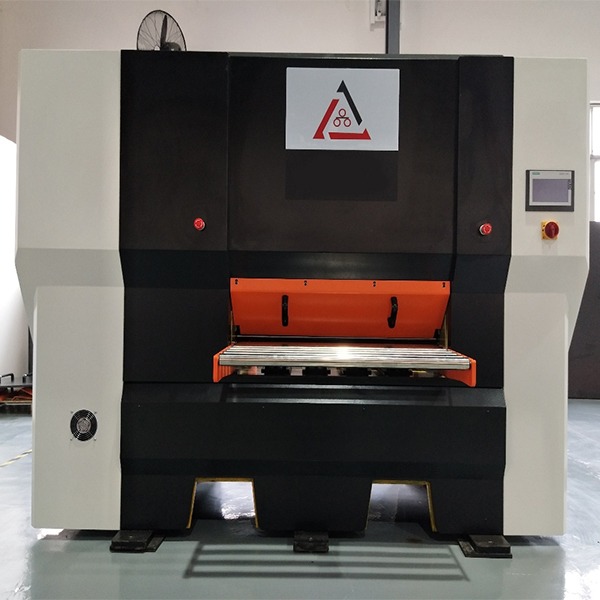
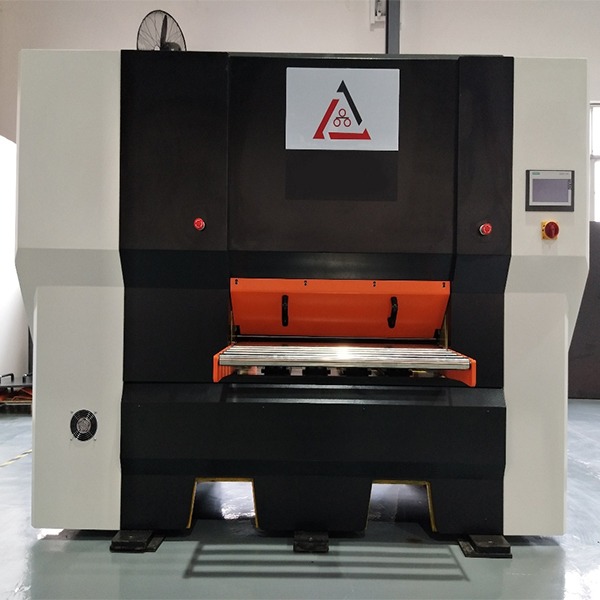
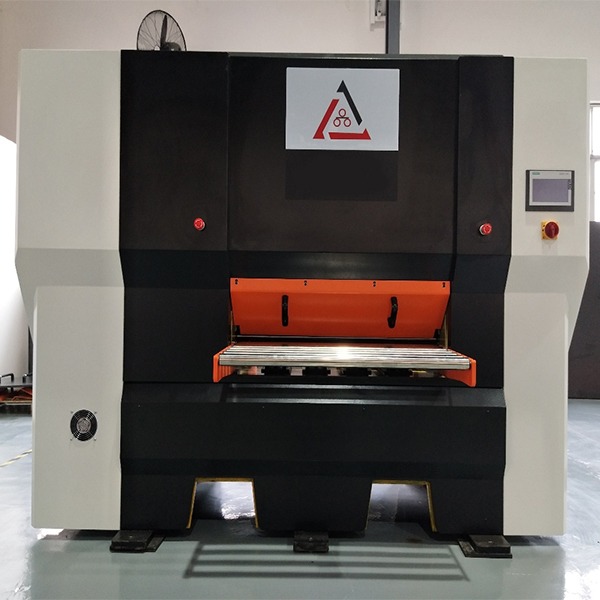
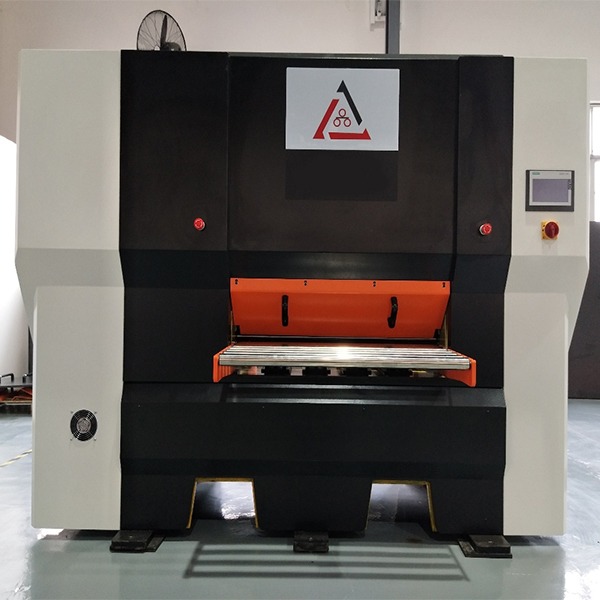
Modern roller levelers and straightening machines are engineered to exploit the Bauschinger Effect with remarkable precision. The goal is to permanently eliminate unwanted curvature, coil set, and internal stress, not just temporarily flatten the material.
Here’s how the process works in practice:
-
Controlled Initial Bending: As a curved or wavy metal sheet enters a leveling machine, it is forced through a series of offset rolls. The first sets of rolls apply a significant plastic bend, deliberately straining the material beyond its yield point in one direction. This creates the precondition of dislocations and internal stress fields described by the Bauschinger Effect.
-
Strategic Stress Reversal: Immediately after this initial bending, the material passes through the next set of rolls, which apply a bend in the opposite direction. Due to the Bauschinger Effect, the metal now yields at a lower stress level in this reverse direction. This controlled reversal allows the machine to plastically deform the material again without applying excessive force that could cause thinning or damage.
-
Progressive Neutralization: This sequence of alternating bends continues through multiple roll sets, with the amplitude of bending gradually decreasing. Each cycle uses the Bauschinger Effect to its advantage, progressively neutralizing the original locked-in stresses and the new stresses introduced by the previous bend.
-
Achieving Stable Flatness: The final result is not just a seemingly flat sheet, but a metallurgically stabilized one. The internal stresses have been systematically balanced and reduced, ensuring the material retains its flatness and does not spring back or distort during subsequent cutting, stamping, or welding processes. This is the essence of true internal stress released.
Why This Understanding Matters for Operations
Grasping the role of the Bauschinger Effect is crucial for:
-
Optimizing Machine Settings: It explains why precise control over roll penetration and intermesh is vital. Correct settings ensure the material is strained just enough to utilize the effect without overworking it.
-
Material Selection and Handling: Different alloys exhibit the Bauschinger Effect to varying degrees. Understanding this helps in predicting machine behavior when switching between materials like mild steel, high-strength steel, or aluminum.
-
Troubleshooting: Issues like residual curl or springback after leveling can often be traced to an insufficient or improperly applied reversal sequence, directly relating to the principles of the Bauschinger Effect.
Conclusion
The Bauschinger Effect is not an abstract scientific concept but the very engine of effective metal straightening. It is the core principle that allows a leveling machine to transform a stressed, curved sheet into a dimensionally stable, perfectly flat workpiece. By harnessing this natural material behavior through precise engineering, modern straightening equipment delivers the reliable flatness and stress relief essential for high-quality manufacturing across industries. For any professional involved in metal fabrication, appreciating this effect is fundamental to mastering the art and science of leveling.
Recent News